Best Portable Power Station Australia (2026): Blackout Backup and Camping Compared
When you buy through links on this page, we may earn a commission at no extra cost to you. Here’s how it works.
Table of Contents
A portable power station is a big rechargeable battery with powerpoints and USB ports on it. When the power goes out, it keeps the Wi-Fi, phones, lights or fridge going. Take it camping and it does the same job without a generator’s noise or fuel. You don’t need to understand the specs to choose one.
- Just the Wi-Fi and camerasSmall →
- An evening blackoutMid-size →
- The fridge as wellLarge →
- Camping with solarMid-size →
Anker SOLIX C1000 Gen 2
Covers the Wi-Fi, lights, phones and laptops through a long evening outage. Anker say it refills from the wall in 49 minutes, and at 11.3kg it’ll go camping too.
Why this one →Anker SOLIX C2000 Gen 2
Twice the battery. That’s about a day and a half for a fridge on our rough sums, and you can add a second battery later.
Why this one →EcoFlow RIVER 3 (UPS)
Sits between the wall and your modem and takes over when the power drops, fast enough that the Wi-Fi stays up. It weighs 3.5kg.
Why this one →EcoFlow DELTA 3 Plus
Four powerpoints, so no power board, and room for up to 1,000W of solar panels. EcoFlow’s AU page states a 5-year warranty.
Why this one →How big a power station do you need?
Two numbers on the box matter, and a water tank is the easy way to picture them. Watt-hours (Wh) are the size of the tank: how long it lasts. Watts (W) are how wide the tap is: how much it can run at once. A station rated at 300W won’t start anything bigger, however full it is.
Here’s what the three sizes in this guide will run, and for roughly how long.
| What you’re running | Small (245Wh) | Mid-size (1,024Wh) | Large (2,048Wh) |
|---|---|---|---|
| Modem and router (about 20W) | 10 hrs | 43 hrs | 87 hrs |
| Laptop (about 60W) | 3.5 hrs | 14.5 hrs | 29 hrs |
| Fridge (labelled 400kWh a year) | Not suited | Most of a day | About 1.5 days |
| A 500W appliance | No (300W limit) | 1.7 hrs | 3.5 hrs |
These are rough hours from our own rule of thumb, one thing running at a time. The wattages are examples, so check the label or power pack on your own gear.
One catch with motors. A fridge draws extra for a moment each time its compressor starts. So choose on the station’s rated output, and treat the peak or surge figure as headroom for that start-up kick.
Work out your own runtime
Most appliances have their wattage on a label or on the power pack. Add up the things you’d run at the same time. That total has to fit under the station’s output in watts.
For how long it lasts, divide the station’s watt-hours by the watts you’re drawing, then take off about 15% (multiply by 0.85) for the losses in turning battery power into mains power. Example: 1,024Wh × 0.85 ÷ 60W = about 14.5 hours. None of the makers here publish an efficiency figure on the pages we read, so treat 15% as a rule of thumb, not a promise.
| Battery (rough hours) | 20W | 60W | 150W | 500W |
|---|---|---|---|---|
| 245Wh (RIVER 3 UPS) | 10 | 3.5 | 1.4 | Over 300W limit |
| 288Wh (C300 DC, USB and DC only) | 12 | 4 | 1.6 | Over 300W limit |
| 1,024Wh (C1000 Gen 2, DELTA 3 Plus, Elite 100 V2) | 43 | 14.5 | 5.8 | 1.7 |
| 2,000Wh (S2000) | 85 | 28 | 11 | 3.4 |
| 2,048Wh (C2000 Gen 2) | 87 | 29 | 11.6 | 3.5 |
| About 4kWh (C2000 Gen 2 with BP2000 battery) | 174 | 58 | 23 | 7 |
Keeping the internet and smart home on
This is the job most people underestimate. When the power drops, the NBN box, the router, the security camera hub and the smart home bridge all go with it, and every camera and sensor in the house goes offline. Those devices draw little power, so even the smallest station here will hold them for hours.
The thing to look for is a UPS mode (short for uninterruptible power supply). The station sits between the wall and your gear and passes mains power through. When the power cuts, it switches to its battery fast enough that the router doesn’t reboot. Six of the seven list a switchover of 10ms or less, which is a hundredth of a second.
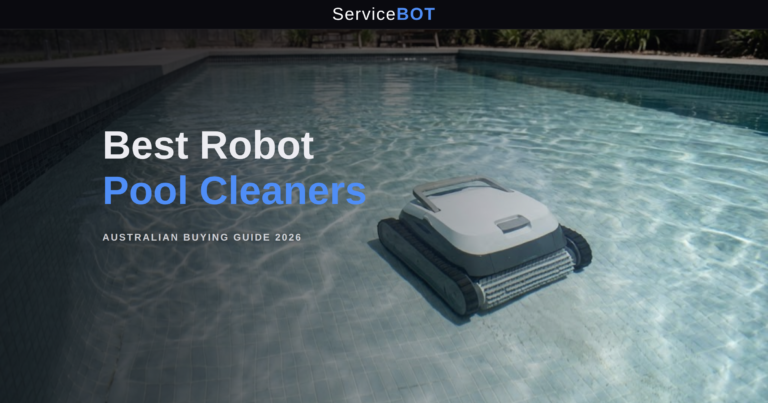
If you’ve got a robot mower or robotic pool cleaner, its charger is another load you can check the label of. You won’t need to run those through a blackout, but a station with solar input can top up a mower or pool robot at a campsite or a holiday house with no mains. Our robot lawn mower guide and robotic pool cleaner guide cover the machines themselves.
Running a fridge
A fridge cycles on and off, so the wattage on its label overstates what it uses over a day. The energy rating sticker is the better guide: divide its kWh per year by 365. A fridge labelled 400kWh a year averages about 1.1kWh a day. On our rule of thumb a mid-size 1kWh station would keep it going for most of a day but not a full one, and a large 2kWh station for about a day and a half.
The power stations, one by one
Smallest to largest. Each one says what it’ll run and who shouldn’t buy it.
EcoFlow RIVER 3 (UPS)
- About 10 hrs modem and router
- 1 powerpoint
- 3.5kg
A small station built for one job: keeping the internet up. It sits between the wall and your modem. When the power drops it switches to its battery in under 10ms, says EcoFlow, so the router doesn’t reboot. On our rule of thumb it holds a 20W modem and router for about 10 hours.
Who it suits: anyone whose main worry in a blackout is the NBN, the cameras and the smart home going dark.
The numbers: EcoFlow list a 245Wh LFP battery (3,000 cycles to 80%), 300W from one AC outlet with X-Boost to 600W, a switchover of under 10ms, 100W USB-C and a 126W car outlet. It charges from the wall in an hour, takes 110W of solar, and weighs 3.5kg.
Anker SOLIX C300 DC
- No powerpoint
- USB-C and 12V only
- About 4 hrs for a 60W laptop
Closer to a giant power bank than a power station. There’s no powerpoint on it. That’s fine for phones, laptops, cameras, LED lights and a router or modem that runs from USB-C or 12V.
Who it suits: a light kit for camping or a blackout, if everything you’d run charges by USB.
The numbers: Anker list 288Wh of LiFePO4, 300W of total output, two two-way USB-C ports (140W in Anker’s description, though its FAQ gives a lower figure for one of them), USB-A, 80% in about an hour, and up to 100W of solar.
Anker SOLIX C1000 Gen 2
- About 43 hrs modem and router
- Most of a day for a fridge
- 11.3kg
The one we’d point most households to. It covers the Wi-Fi, lights, phones and laptops through an evening outage, and keeps a fridge going for most of a day on our rule of thumb. Anker say it refills from the wall in 49 minutes, so after a blackout it’s ready again quickly. At 11.3kg it’s light enough to take camping.
Who it suits: a household that wants the essentials covered through an evening outage, plus a station that can go in the boot.
The numbers: Anker list a 1,024Wh LiFePO4 battery rated for 4,000 cycles to at least 80%, 2,000W of AC output with a 3,000W peak, a 10ms UPS, and nine outputs including a 140W USB-C port. With UltraFast charging switched on it pulls 1,600W from the wall and fills in 49 minutes. Solar input goes to 600W, and Anker quote under 20dB in operation.
EcoFlow DELTA 3 Plus
- 4 powerpoints
- 1,000W of solar panels
- 5-year warranty on EcoFlow’s AU page
The same size battery as the C1000 Gen 2, set up for camping. It has four powerpoints, so you can skip the power board, and it takes up to 1,000W of solar panels, the most of the mid-size stations here alongside the BLUETTI. It weighs 12.5kg.
Who it suits: campers and caravanners who’ll lean on solar panels, and anyone who wants four powerpoints.
The numbers: EcoFlow’s AU page lists a 1,024Wh LFP battery (4,000 cycles to 80% or more), 1,800W across four AC outlets, X-Boost to 2,400W and a 3,600W surge. It has a 10ms UPS, 140W USB-C, 1,500W AC charging and up to 1,000W of solar input, and the page states a 5-year warranty.
BLUETTI Elite 100 V2
- 80% charged in 45 min
- 1,000W of solar panels
- About 11.3kg
A close match for the DELTA 3 Plus: the same size battery and the same 1,000W solar limit. BLUETTI say it reaches 80% from the wall in 45 minutes.
Who it suits: the same buyer as the DELTA 3 Plus. Pick on price and how the outlets suit you.
The numbers: BLUETTI list a 1,024Wh LiFePO4 battery rated for over 4,000 cycles, 1,800W of AC output with 2,700W of “lifting power”, nine ports, a 10ms UPS and 1,200W TurboBoost charging. It takes up to 1,000W of solar. BLUETTI give the weight as 25lb, which is about 11.3kg, and quote a 30dB noise level.
Anker SOLIX C2000 Gen 2
- About 1.5 days for a fridge
- About 4kWh with a second battery
- 18.9kg
Twice the battery of the C1000 Gen 2. On our rule of thumb that’s about a day and a half for a fridge. Add one BP2000 battery and you have about 4kWh. Anker say an 800W car input charges it in 2.6 hours on the road, which suits a caravan.
Who it suits: anyone who loses power for hours at a time and wants the fridge running alongside the essentials, or a caravan that needs a day or two between charges.
The numbers: Anker list a 2,048Wh LiFePO4 battery (4,000 cycles to 80%) and 2,400W at 230V with a 4,000W peak. It takes up to 2,300W from the wall, and Anker say it fully charges in 58 minutes using AC and solar together. It has two 140W USB-C ports and a 10ms UPS.
Anker SOLIX S2000
- 10,000 charge cycles rated
- 5-year warranty on Anker’s AU page
- 16.2kg
Built to sit in the hall cupboard for years. Anker rate its battery for 10,000 charge cycles with more than 60% of its capacity left, and their AU page states a 5-year warranty. The trade-off is power: it delivers 1,500W, against 2,400W from the C2000 Gen 2.
Who it suits: standing blackout backup for the router, modem, lights and fridge, for years.
The numbers: Anker list a 2,000Wh LFP battery, 1,500W across two AC outlets, a UPS switchover of 10ms or less, and up to 2,300W passed through from the wall in bypass mode. It charges at 1,150W by default (about 2.3 hours, says Anker) or 1,600W in UltraFast mode. Solar input tops out at 400W.
All seven side by side
| Battery | Powerpoint output | Weight | |
|---|---|---|---|
| EcoFlow RIVER 3 (UPS) | 245Wh | 300W | 3.5kg |
| Anker C300 DC | 288Wh | None (USB and DC) | Not stated |
| Anker C1000 Gen 2 | 1,024Wh | 2,000W | 11.3kg |
| EcoFlow DELTA 3 Plus | 1,024Wh | 1,800W | 12.5kg |
| BLUETTI Elite 100 V2 | 1,024Wh | 1,800W | About 11.3kg |
| Anker C2000 Gen 2 | 2,048Wh | 2,400W | 18.9kg |
| Anker S2000 | 2,000Wh | 1,500W | 16.2kg |
And the three things worth checking once you know your size: how fast it switches over in a blackout, how much solar it takes, and the warranty on the maker’s Australian page.
| Switchover | Solar input | Warranty | |
|---|---|---|---|
| EcoFlow RIVER 3 (UPS) | Under 10ms | 110W | Not stated |
| Anker C300 DC | Not listed | 100W | Not stated |
| Anker C1000 Gen 2 | 10ms | 600W | Not stated |
| EcoFlow DELTA 3 Plus | 10ms | 1,000W | 5 years |
| BLUETTI Elite 100 V2 | 10ms | 1,000W | Not stated |
| Anker C2000 Gen 2 | 10ms | Not stated | Not stated |
| Anker S2000 | 10ms or less | 400W | 5 years |
“Not stated” means we couldn’t find the figure on the maker’s Australian product page when we looked. It doesn’t mean there’s no warranty: Australian Consumer Law applies either way, and the listing or the maker may give a term we didn’t see. Also missing from those pages: the C1000 Gen 2’s powerpoint count, the Elite 100 V2’s outlet mix and USB-C wattage, the C300 DC’s cycle life, and whether the DELTA 3 Plus takes an extra battery. Check anything that matters to you on the listing before you buy.
Before you buy
The battery type is the long-lasting kind. All seven list LiFePO4 (also written LFP) on the maker’s page. It’s the chemistry these makers rate for thousands of charge cycles, which is what you want in something that may sit charged for years.
Ignore the biggest number on the box. Peak, surge, X-Boost and lifting power are short bursts or special modes. Size the station on its rated output and treat the rest as headroom.
Solar is slower than the number on the panel. A panel’s watt rating is measured in ideal conditions, and Australian sun, heat and panel angle all pull it down. Plan on solar topping a station up over a day, not refilling it in an hour.
Start with the mid-size
- A long evening of Wi-Fi and lights
- Most of a day for a fridge
If you’re torn, a mid-size 1kWh station is the safe middle. It covers the internet and lights through a long evening outage, keeps a fridge going for most of a day on our rule of thumb, and is light enough to take camping. Our pick at that size is the C1000 Gen 2 for its fast wall charge, or the DELTA 3 Plus if you’ll use solar.
Where you buy changes the warranty. Some makers add extra years for orders from their own store. Check the warranty on the page you’re buying from, and keep the receipt.
It isn’t a home battery. A portable station plugs in like an appliance. You plug things into it. Connecting one to your home’s wiring is a job for a licensed electrician, never a DIY lead.
Questions people ask
What is the best portable power station in Australia?
For most homes, the Anker SOLIX C1000 Gen 2: 1,024Wh, 2,000W, a 10ms UPS and a 49-minute full charge from the wall, says Anker. For longer blackouts, the C2000 Gen 2 has twice the battery and takes a second one. If you’ll rely on solar, the EcoFlow DELTA 3 Plus and BLUETTI Elite 100 V2 both take up to 1,000W of solar input.
How long will a 1000Wh power station last?
Divide the watt-hours by your load in watts and take off about 15% for conversion losses. A 1,024Wh station running a 60W load lasts about 14.5 hours, a 20W modem and router about 43 hours, and a 500W load about 1.7 hours.
Can a portable power station run a fridge?
Yes, if its output covers the fridge’s starting draw. For how long, use the energy rating label: kWh per year divided by 365 gives the daily use. A fridge labelled 400kWh a year averages about 1.1kWh a day, so a 1kWh station covers most of a day and a 2kWh station about a day and a half, on our rule of thumb.
Will it keep my NBN and Wi-Fi running in a blackout?
Yes. Look for a UPS mode: the station passes mains power through while plugged in and switches to battery in 10ms or less on six of the seven here, fast enough to keep a router from dropping out. Even the 245Wh EcoFlow RIVER 3 (UPS) holds a 20W modem and router for about 10 hours on our rule of thumb.
Is a power station better than a petrol generator?
For a home blackout and most camping, it’s quieter, needs no fuel and can be used indoors, which a petrol generator can’t, because of its exhaust fumes. A generator still wins for running big loads for days with a jerry can on hand.
Can I charge a power station with solar panels?
All seven take solar, from 100W on the C300 DC to 1,000W on the DELTA 3 Plus and Elite 100 V2. Check the station’s solar input limit and voltage range against the panel before you buy, and expect less than the panel’s rated watts in real sun.
Anker, EcoFlow or BLUETTI?
You don’t need to pick a brand, just the size. At 1kWh the three are close on paper: the C1000 Gen 2 charges fastest from the wall, the DELTA 3 Plus has four AC outlets and a 5-year warranty on EcoFlow’s AU page, and the Elite 100 V2 matches it on solar. Choose on price and outlets.
Related guides
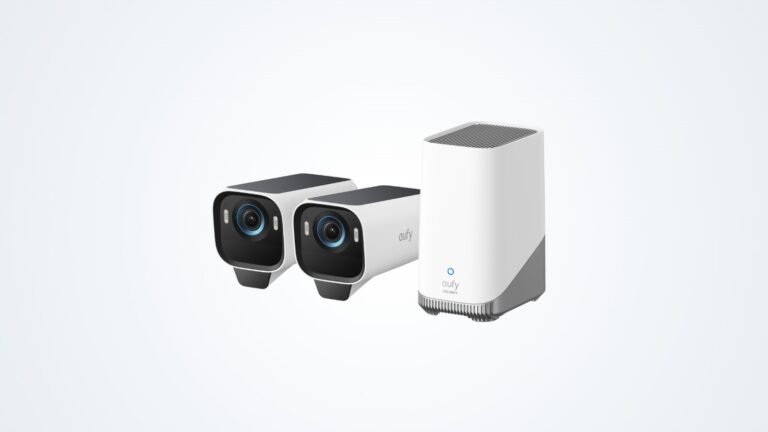
A power station keeps cameras online when the power drops, so it pairs well with our guide to security cameras without a subscription. Our robot lawn mower and robotic pool cleaner guides cover the outdoor robots you might charge from one. Or browse every portable power station we list.
We earn a commission if you buy through these links, at no extra cost to you.



Was this useful?
If something here is out of date or we've got something wrong, telling us is the fastest way to get it fixed.