Most robot vacuum guides assume your whole house is one surface. Australian homes rarely are. If you are after a robot vacuum for carpet that also copes with tiles, floorboards and hybrid, here is what works on each, and what goes wrong where they meet. If you only read one line: the ECOVACS DEEBOT T90 Omni for carpet mixed with hard floors, and the Dyson 360 Vis Nav for a house that’s mostly carpet.
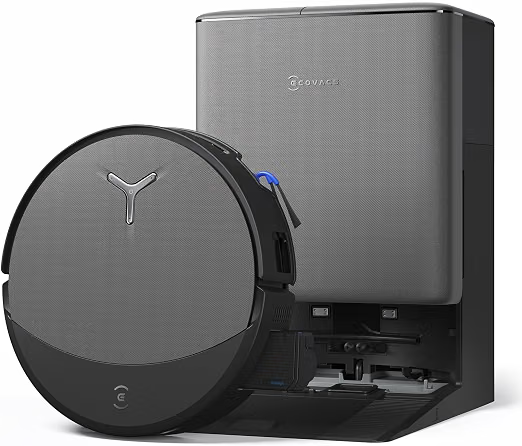
ECOVACS DEEBOT T90 Omni
Lifts its mop 15mm and raises suction when it reaches carpet, and ECOVACS rate it for a 24mm threshold, so it’s built for the rug edges and door strips between rooms.
Why this one →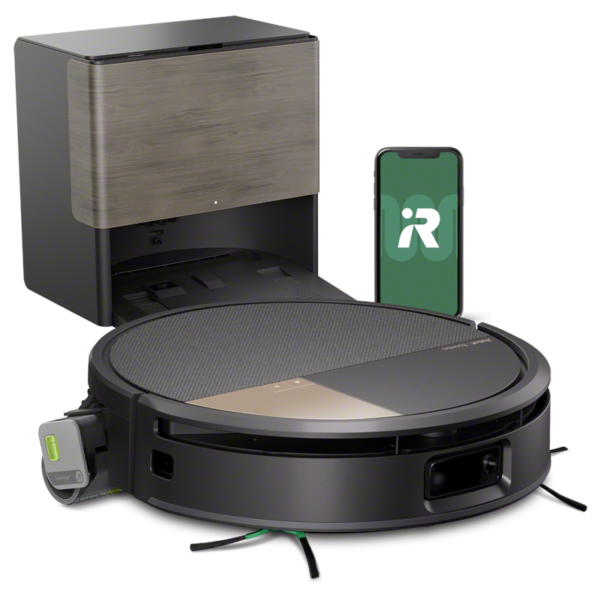
iRobot Roomba Max 705 Combo
A self-cleaning rolling mop that leaves little water behind, and iRobot say it steers around carpet while it mops, so your boards never get a soaked pad.
Why this one →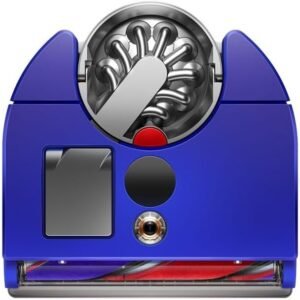
Dyson 360 Vis Nav
No mop at all, and that is the point. If your house is carpet, you are paying for a water tank you will never use.
Why this one →Walk through a typical Australian house and you cross three surfaces before you reach the back door. Tile through the entry and living areas. Floorboards or hybrid down the hall. Carpet in the bedrooms, usually with a rug over the top of it.
Almost every robot vacuum guide is written as though you have one of those, not all four. That is how people end up with a machine that mops beautifully across tile and then drags a damp pad onto the bedroom carpet.
So this guide is organised by surface, and then by the part nobody writes about: what happens where the surfaces meet.
Not sure which one fits your home?
4 quick questions, then only the robots that fit.
The two things that actually decide this
Suction figures get all the attention. On mixed floors, two other things matter more.
Whether the mop lifts, and how far
A robot that mops has to get the wet pad off the ground before it drives onto carpet. Some lift the pad a few millimetres, which is enough for flat bedroom carpet and not enough for a shaggy rug. Some raise the whole body. Some do not lift at all and simply try to avoid carpet, which works right up until the map gets it wrong.
Check the mop-lift height before the suction number. It is the specification that decides whether you like the machine, and the one iRobot does not publish at all.
How much water it puts down
Tile does not care. Floorboards and laminate very much do. Hybrid sits in between: the top layer is water-resistant, the click-lock joints are less so. A robot that lays down a lot of water and leaves it to air-dry is fine on porcelain and a slow problem on timber.
Rolling mops that wash and wring themselves as they go put down less standing water than a pad that gets wet once and stays wet. On timber and hybrid, that difference is the whole ballgame.
Compare all seven
| Model | Does it mop? | Safe where you have carpet? | Best for |
|---|---|---|---|
| ECOVACS DEEBOT T90 Omni | Yes, rolling mop that rinses itself | YesLifts the mop 15mm and turns suction up on carpet | Mixed floors, rugs and pets |
| ECOVACS DEEBOT T50 Omni | Yes, extending mop washed at the dock | YesLifts the mop automatically, about 10mm | Mixed floors, low furniture |
| Dreame X50 Ultra | Yes, washes its mop in hot water | YesLifts the mops 10.5mm, or leaves them at the dock for long pile | Door strips and steps between rooms |
| iRobot Roomba Max 705 Combo | Yes, rolling mop that cleans itself | YesAvoids carpet while mopping and covers its roller | Hard floors, no streaks |
| iRobot Roomba Plus 508 Combo | Yes, two extending pads | Worth askingPads lift on carpet; iRobot does not say how far | Tiles, and along the skirting boards |
| iRobot Roomba 115 Combo | Yes, a simple flat pad | YesDetects carpet and avoids mopping it, plus No Mop Zones | A first mopping robot, mostly hard floors |
| Dyson 360 Vis Nav | No, vacuum only | YesNothing wet to worry about | Carpet-heavy homes, allergies |
Where a maker does not publish a mop-lift height, we say so rather than guess. It is the thing most worth asking a retailer about before you buy.
Carpet
Carpet is where robot vacuums are weakest, and it is worth knowing that before you buy one for a carpeted house. In CHOICE’s Australian lab tests, robot vacuums averaged 88% on hard floors and 26% on carpet, and the best carpet result was 49% (CHOICE, Is a robot vacuum worth buying?). A robot keeps carpet tidy between proper vacuums. It does not replace them.
Pile height decides the rest. Low-pile carpet, the flat, dense kind most Australian bedrooms have, is fine for every machine here. High-pile and thick carpet, like a deep shag rug in the lounge, is where robots get stuck, beach themselves, or quietly drive around the edge and call it done.
If you want mopping too, the question is what happens to the wet mop at the carpet edge. There are two answers on this page: the mop lifts (DEEBOT T90 Omni at 15mm, DEEBOT T50 Omni, Roomba Plus 508 Combo), or the robot stays off carpet while it mops (Roomba Max 705 Combo, Roomba 115 Combo).
If your house is mostly carpet, the honest answer is that you may not want a mop at all. You are paying for a water tank, a dock that needs refilling, and a lifting mechanism you will use in two rooms. A pure-suction machine is cheaper, lighter and has fewer things to go wrong.
Their own category of misery. No robot handles them well. Fold the tassels under, or expect to rescue the machine.
Tiles and grout
Tile is the easiest surface for a robot to drive on and the hardest to actually get clean, because the dirt is not on the tile. It is in the grout, which sits below the surface where a spinning pad never reaches.
If a listing claims otherwise, read the fine print. A good one keeps surface dirt down so the grout stains more slowly, genuinely worth having, but not the same thing as cleaning grout.
The other tile-specific issue is edges. Robots are round, rooms are square, and skirting boards collect dust. Look for side brushes or mop pads that push out past the body, because that is the only mechanism that reaches into the corner.
Timber and hardwood floorboards
Water is the enemy. Whether your boards are sealed or oiled, standing water will eventually find the gaps between them, raise the grain, and leave you with a repair job that costs more than the robot.
This does not mean avoid mopping. It means avoid soaking. A rolling mop that continuously wets and wrings itself lays down far less water than a flat pad that gets saturated at the dock and then drags that same water around for forty minutes.
On brush type: soft rollers are gentler on a timber finish than stiff bristles, and they pick up fine dust better on a hard surface. On carpet the opposite is true. If your house is genuinely split, that trade-off is unavoidable and worth knowing about before you are disappointed.
Hybrid, vinyl plank and laminate flooring
Hybrid flooring is everywhere in Australian renovations now and it is barely mentioned in robot vacuum guides, which is odd given how specific its requirements are.
Hybrid is a rigid core (usually a stone and plastic composite) under a vinyl wear layer. The surface genuinely is water-resistant, which is why people choose it for kitchens and hallways. The click-lock joints between planks are the weak point. Water sitting on a joint for long enough will work its way in, and the plank will lift at the edge.
Laminate is less forgiving again. Its core is compressed fibreboard, and fibreboard swells. A laminate floor that gets repeatedly over-wetted will show it at the joins within a year.
Damp-mop only. Every hybrid and laminate manufacturer says the same thing in their care instructions. Check that your robot lets you set the water level down, then actually set it down. The default is usually mid.
One thing worth saying plainly: a robot vacuum will not damage a hybrid floor by driving on it. The wheels are rubber and the machine is light. The risk is entirely about water, and it is entirely manageable.
Where the floors meet
This is the bit that decides whether you like the thing. Transitions between surfaces are where robots lose. A tile-to-timber trim strip is a small step. A carpet edge is a bigger one. A door threshold with a metal strip is the worst of the lot, and plenty of machines that handle each room fine will stall on the join between them.
Two mechanisms help. Larger wheels climb a step that smaller ones cannot. And a machine that raises its whole body, rather than just the mop, clears more without beaching. Of the seven here, the highest published figures are Dreame’s for the X50 Ultra, which raises its whole body on retractable legs: obstacles up to 6cm and single-layer thresholds up to 4.2cm. Next is ECOVACS’ 24mm for the DEEBOT T90 Omni, which covers most door strips. iRobot publish no climbing figure for the three Roombas here, and we haven’t found one for the T50 Omni.
If it does not clear a threshold, you have a machine that cleans one zone and waits for you to carry it to the next. Which is a robot vacuum in name only.
The picks, by what your floors actually are
The T90 Omni handles the carpet edge two ways at once. Its Triple Lift System raises the mop 15mm and turns suction up as soon as it reaches carpet, so the roller never meets a rug wet and the pile gets more air than the tiles do. ECOVACS rate it for a 24mm threshold, which covers most door strips and rug edges.
The mop is a 27cm roller that rinses itself against pressurised nozzles as it goes, the design that leaves the least standing water behind, which is what timber and hybrid need. ECOVACS’ ZeroTangle 4.0 brush is built to stop hair winding round it, and at 95mm tall it still fits under most sofas.
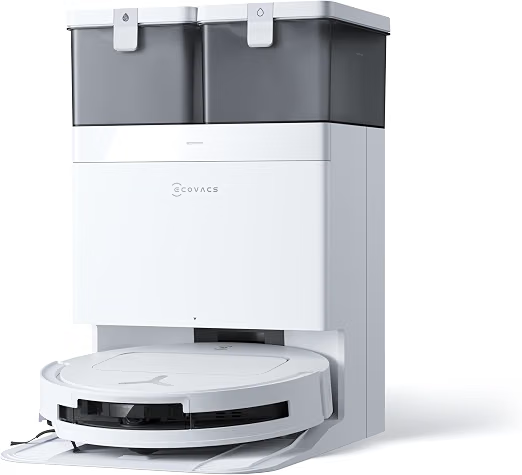
At 8.1cm the T50 Omni gets under beds and sofas that stop taller machines, which is exactly where dust and hair collect. It lifts its mop automatically before it drives onto carpet. ECOVACS have published both 9mm and 10mm for that lift, so treat it as right for flat bedroom carpet rather than a thick rug.
An extending side brush and mop push out along the skirting boards, where tile dust gathers, and the station washes the mop in hot water between runs.
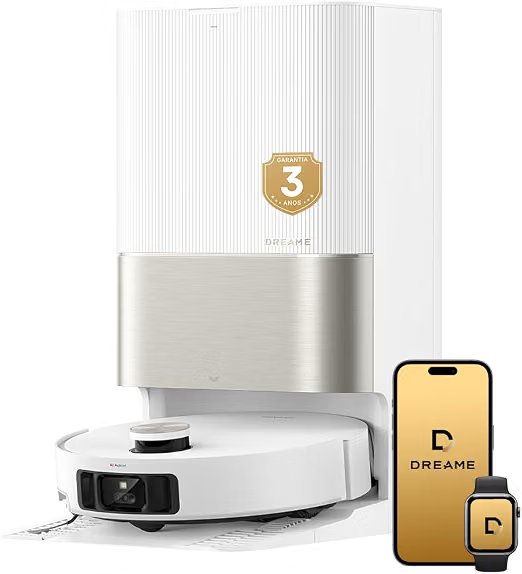
This is the one to look at if the trouble in your house is the joins between rooms. Dreame’s ProLeap system lifts the robot on retractable legs, and its Australian page rates it over obstacles up to 6cm and single-layer thresholds up to 4.2cm, the highest climbing figures on this page by some distance.
On carpet you choose the behaviour per rug in the app: lift the mops 10.5mm for short pile, or have it go back to the dock and leave the mops there for long-pile bedroom carpet. The dock washes the mops in water heated to 80°C and dries them. The top sensor drops so the body sits at 89mm, low enough for a lot of sofas.
A self-cleaning rolling mop rather than pads, which is the design that leaves the least water behind and does not push a dirty pad around after the first room. The dock washes the roller between runs. On tile, boards and hybrid this is the finish you want.
iRobot’s Australian page says it avoids carpet automatically in vacuum-and-mop and mop-only modes, and uses a cover over the roller to keep carpets dry. It vacuums the carpet on a separate vacuum-only run.
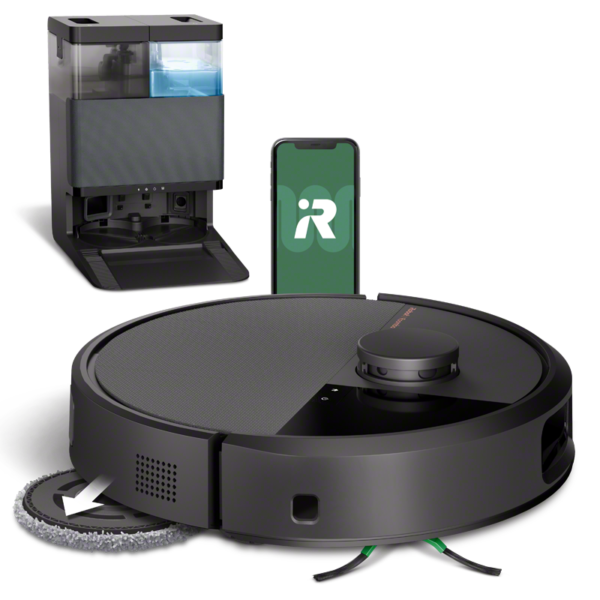
The DualClean pads extend around 18% closer to the edges than a standard fixed pad, which is the mechanism that gets into the strip along the skirting board where tile dust collects. Paired with a dock that washes them, so the pads do not go back on damp and dirty.
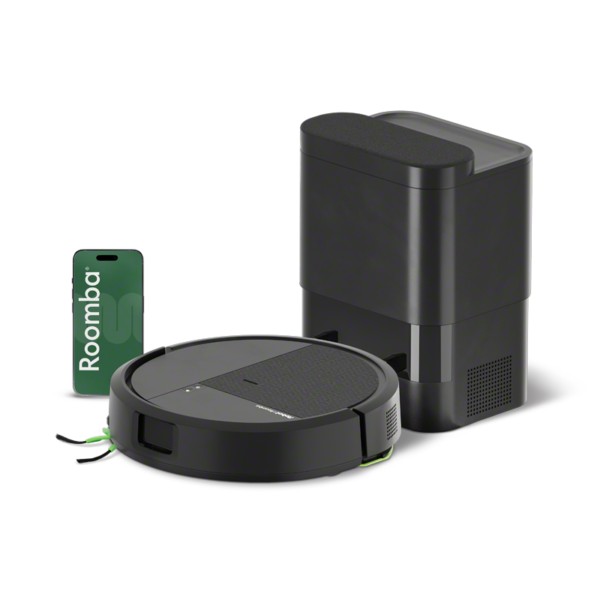
The entry point into mopping, with a dock that empties the bin for you so you are not doing it every second day. You draw No Mop Zones in the app to keep the pad off rugs, which is the single failure that puts people off combination machines. iRobot’s own FAQ says it detects carpet and avoids mopping it, and the zones are there for the rugs it misjudges.
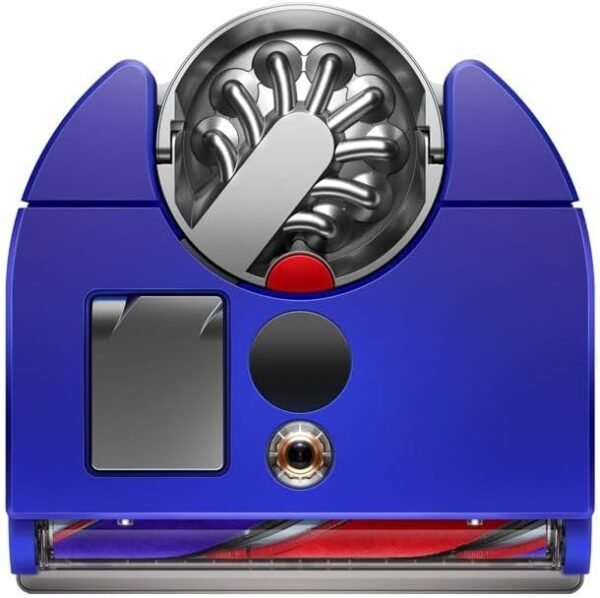
No mop at all, and that is the point. Fully sealed filtration traps 99.99% of particles down to a tenth of a micron, tested to ASTM F3150 in Boost mode, as Dyson’s listing states, which matters if carpet is holding dust and dander in a house with someone who reacts to it. A 30cm brush bar, four power modes and up to 65 minutes of runtime.
When a robot is not the answer
A few situations where we would tell you to keep your money.
If your house is entirely deep-pile carpet, a robot will struggle to drive on it and will not deep-clean it. A decent upright does a better job for less.
If you have a two-storey house and no intention of buying two machines, you are signing up to carry a 4kg robot up and down stairs on a schedule. None of the seven here climbs stairs.
If your floors are covered in cables, kids’ toys and dog bowls, the robot will spend its run finding them. The tidying you would do to make a robot work is most of the work you were trying to avoid.
Questions people actually ask
Do robot vacuums work on carpet?
Yes, on flat and medium-pile carpet. Deep or shaggy pile is where they get stuck or drive around the edge. Most modern models detect carpet and raise suction on it; the ones that also mop should lift the pad clear before they drive on. In CHOICE’s Australian lab tests they scored far lower on carpet than on hard floors, so treat a robot as a between-vacuums tidy on carpet, not a replacement.
Will a robot vacuum scratch timber floorboards?
In normal use, no. The wheels are rubber and the machine is light. Scratches come from grit trapped under a brush or wheel, which is an argument for running it more often rather than less. The real risk to timber is water, not scratching.
Can a robot vacuum mop hybrid flooring?
Yes, damp. Hybrid’s wear layer is water-resistant but the click-lock joints between planks are not, so standing water is the thing to avoid. Turn the water setting down from its default, and prefer a self-wringing rolling mop over a flat pad that stays saturated.
Can a robot vacuum mop laminate floors?
Same rule, less margin. Laminate has a fibreboard core that swells if water reaches it. Damp-mop only, low water setting, and do not let the robot sit in one spot.
Do robot vacuums clean grout?
No. Grout sits below the tile surface and a spinning pad does not reach into it. A robot keeps surface dirt down so grout stains more slowly, which is worth having, but it will not clean grout that is already dirty.
What is the best robot vacuum for carpet in Australia?
For a house that is mostly carpet and needs no mopping, the Dyson 360 Vis Nav: there is no water on board to worry about. For carpet mixed with hard floors, the ECOVACS DEEBOT T90 Omni, because it lifts its mop 15mm and turns suction up when it reaches carpet.
What is the best robot vacuum for rugs?
One that gets its mop out of the way and can climb the rug’s edge. Of these seven, the DEEBOT T90 Omni lifts its mop 15mm and turns suction up on carpet, and ECOVACS rate it for 24mm door strips and rug edges. On the Roomba 115 Combo, draw No Mop Zones around your rugs. Long tassels are the usual snag for any robot, so tuck them under or set a keep-out zone.
Should I get a robot vacuum without a mop for carpet?
If your house is mostly carpet, yes. A mop adds a water tank and a pad you then have to keep away from the pile. The Dyson 360 Vis Nav is the vacuum-only machine here. Our best robot vacuum and mop guide covers robots that leave their mops at the dock for carpet.
Which robot vacuum is best for carpet and pet hair?
Of these seven, the DEEBOT T90 Omni, for its ZeroTangle 4.0 brush and the way it turns suction up on carpet. Our pet hair guide compares more machines on anti-tangle brushes and self-emptying docks.
Can a robot vacuum clean a shag or high-pile rug?
Not well. Deep shag is where robots get stuck. The Dreame X50 Ultra can leave its mops at the dock for long pile, but no machine here claims shag. Lift the rug before a run, or set a keep-out zone around it in the app.
Which robot vacuum climbs the highest door threshold?
Of these seven, the Dreame X50 Ultra: obstacles up to 6cm and single-layer thresholds up to 4.2cm, as Dreame publish. Then the DEEBOT T90 Omni, rated by ECOVACS for 24mm. iRobot publish no figure for the three Roombas, and we haven’t found one for the T50 Omni.
Is there a robot that shampoos or steam-cleans carpet?
None of the seven here. They vacuum carpet, and the mopping ones keep the wet mop away from it. A wet clean of carpet is still a job for a carpet washer.
Which robot vacuum is best for hardwood floorboards?
One with a rolling mop that rinses itself as it goes and a water level you can turn down: the Roomba Max 705 Combo or the DEEBOT T90 Omni. The risk on timber is standing water, not scratches.
My house has tile, boards and carpet. What do I actually need?
A mop that lifts, and enough wheel clearance to get over the trim strips between rooms. Those two things matter more than the suction figure. The DEEBOT T90 Omni and the DEEBOT T50 Omni are the two on this list built for it.
Related guides
If you have already settled the floor question: our best robot vacuum and mop guide matches a pick to every type of home, and the navigation explainer covers how these machines build a map in the first place. Our warranty guide sets out each brand’s Australian terms in full. Once the floors are sorted, our robot window cleaner guide covers the glass, including the outside of upstairs windows. You can also browse the full robot vacuum range.
New buying guides and robot news, whenever there’s something worth telling you about.
No spam. Unsubscribe anytime.
ServiceBot earns a commission if you buy through the Amazon links on this page, at no extra cost to you. That is how we keep guides like this free and independently written.
This guide is built from each manufacturer’s published specifications and their own Australian listings. Where a specification is not published (mop-lift height, most often), we say it is not published instead of guessing. We do not publish customer ratings. Where a button shows a price, it’s the store’s price at the time shown, and the listing always has the current one.
Last updated October 2026.