Smart Home Australia 2026: How It Went Mainstream
Updated ·5 min read·By ServiceBot Team·Affiliate links, we earn a commission at no extra cost to you.
Table of Contents
For years the automated home was a futuristic tease. Early robot vacuums were notorious for getting tangled in phone chargers, and a robot mower meant days of burying boundary wire.
Through 2026 that has changed. Better on-board artificial intelligence, cheaper components and a common smart-home standard have moved household robots from expensive novelties to something closer to an appliance.
The global household robot market was valued at just under $14 billion in 2025 and is projected to pass $17.4 billion this year, according to Fortune Business Insights. For Australian homeowners and tradies, though, the market size is not the story. What matters is how much these machines have changed in twelve months.
The robots understand what they see
A vacuum can now tell a hardwood floor from a stray sock from a pet accident, and act differently for each.
Read on →The backyard caught up
Mowers dropped the boundary wire. Pool cleaners map the pool and dock themselves. Outdoors is the fastest-growing part of the category here.
Read on →The parts got cheap
Laser sensors, brushless motors and better batteries all fell in price, so mid-range machines now carry what used to be flagship-only features.
Read on →Then and now
| The job | How it used to go | How it goes in 2026 |
|---|---|---|
| Robot vacuum | Bounced off the walls until the battery ran out, and ate phone chargers on the way | Recognises a sock, a cable and a pet accident as three different problems |
| Robot mower | Days spent pegging a boundary wire around the lawn before the first cut | Maps the garden from satellite positioning and on-board cameras, with no wire at all |
| Pool cleaner | A corded unit dragged around the pool, or an hour with a brush | Maps the pool, scrubs the walls and the waterline, and returns to its dock |
| All of it together | Locked into whichever app came with the box | A common standard called Matter lets different brands talk to each other |
The brain upgrade: seeing, understanding, acting
The biggest leap in 2026 is not mechanical, it is computational. The shift is away from simple rule-based automation, where a robot bounces off the walls until the room is covered, toward machines that build a picture of the room and act on it.
The industry calls the underlying approach a vision-language-action model, which means the robot connects what it sees, what it is told, and what it then does. In practice, a premium household robot now uses cameras and depth sensors, which measure distance by timing a light pulse, the same principle as the laser scanner in a robot vacuum, to tell a hardwood floor from a stray sock from a pet accident, and change its behaviour in milliseconds.
The language half matters just as much. Being able to say “clean up the cereal I dropped under the kitchen island” is a different experience from setting up a schedule in an app.
Every earlier generation of household robot could move. What separates the 2026 machines is that they can tell one thing on the floor from another, which is the difference between a robot you trust to run unsupervised and one you follow around the house.
Out of the house: the backyard catches up
Vacuuming and mopping still account for most of domestic robotics, but the fastest-growing part of the Australian market is outdoors.
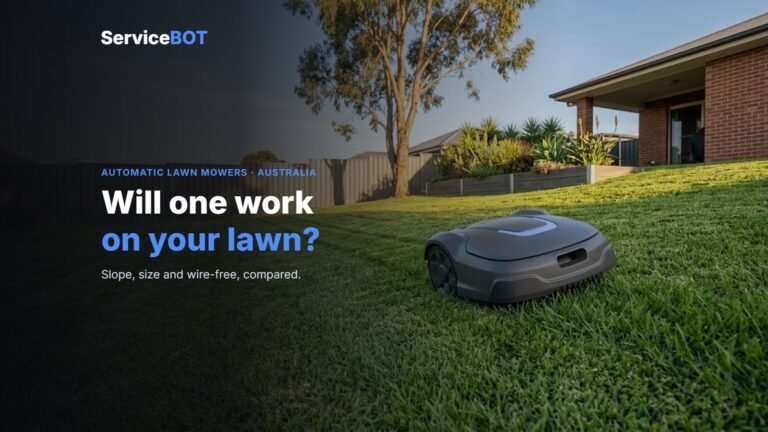
For an Australian backyard, the Saturday morning spent pushing a loud petrol mower or scrubbing the pool by hand is ending. The current generation of robot mowers has finally dropped the buried perimeter wire. They use a satellite positioning system accurate to a centimetre or so, paired with on-board cameras, to map a complex garden, dodge a forgotten cricket bat, and shift their mowing schedule around the weather forecast.
Cordless pool cleaners have gone the same way. They now map the pool, scrub the walls and the waterline with some method rather than at random, and return to a charging dock when they are done.
Flagship features at mid-range prices
Why the sudden jump in how many people own one? It comes down to the supply chain. Component prices have fallen over the last two years, which has let manufacturers put features into mid-range models that used to be flagship-only.
Laser scanners and brushless motors both cost markedly less than they did. More importantly, better batteries mean a sub-$600 robot can now run for 90 minutes at full suction or full cutting power. The result is more capability for less money, which is what actually drives adoption.
The ecosystem era
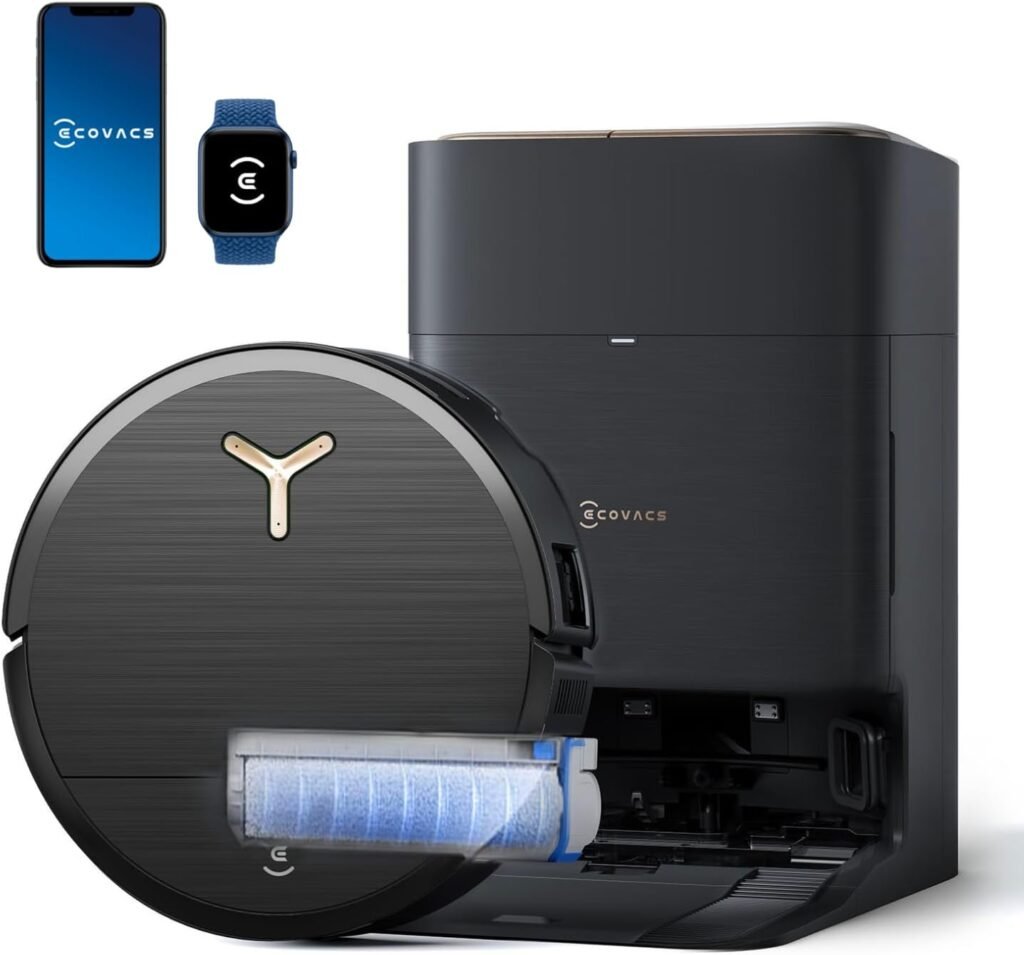
The hardware is now backed by software that cooperates. Matter is an industry-wide standard that lets devices from different manufacturers work together, and its widespread adoption means brand lock-in is largely over. Your ECOVACS vacuum, your smart blinds and your security system can run through one hub, whether that hub is Apple, Google or Amazon.
In 2026, real automation is not just a robot doing a chore. It is the rest of the house adapting around it.
Where to start
If any of this has you wondering what is actually worth buying here, our guides cover the machines we can vouch for as available in Australia with proper warranty support.
Indoors, robot vacuums by floor type is the place to start if your home mixes carpet, tiles and floorboards, and how robot vacuums map your home explains the navigation described above in plain English. Outdoors, we compare robot lawn mowers on slope and coverage, robot pool cleaners on pool type, and window cleaning robots on the safety specification that matters when the machine is hanging outside an upstairs window.
New buying guides and robot news, whenever there’s something worth telling you about.
No spam. Unsubscribe anytime.
Market figures are from Fortune Business Insights. Everything else here describes what the current generation of machines does, drawn from manufacturers’ published specifications and our own product guides.
ServiceBot earns a commission when you buy through links on this site, at no extra cost to you. It never affects which products we recommend or how we rank them. See our full affiliate and research disclosure for the detail. Last updated September 2026.
We earn a commission if you buy through these links, at no extra cost to you.




Was this useful?
If something here is out of date or we've got something wrong, telling us is the fastest way to get it fixed.